29 December 2014

Online security for activists


Political and social activists often need to protect their identities and to be able to talk without being overheard. The risks they face, and responses they must take, continue to evolve. News about the increasing use of monitoring and spying by security services is fair warning: dissenters are highly likely to be monitored.

The Guardian (UK), which has had many scoops on Edward Snowden and national and international spying, has published an article with "21 tips, tricks and shortcuts to help you stay anonymous online"
http://www.theguardian.com/technology/2015/mar/06/tips-tricks-anonymous-privacy "Avoiding being tracked online is nearly impossible, but here are a few ways to reduce the risk".

For LGBTI activists (Lesbian, Gay, Bisexual, Transgender, Intersex and others), revealing their gender identities can be deemed illegal in many countries. This guide for LGBTI activists in sub-Saharan Africa therefore provides clear warnings about the dangers faced. 

"Digital security tools and Tactics for the LGBTI community in Sub-Saharan Africa" provides a free set of tools and guides which it dubs "Security in a Box".

While these methods are designed for a specific community, most can be used by activists for other causes and in other locations. 

The areas covered are:

Part I – Context
Introduction
Digital attacks against the African LGBTI community
How to assess your digital security risk

Part II – How-to Booklet
Protect your computer from malware and hackers
Protect your information from physical threats
Create and maintain secure passwords
Protect the sensitive files on your computer
Recover from information loss
Remove hidden metadata from files
Destroy sensitive information
Keep your Internet communication private
Remain anonymous and bypass censorship on the internet
Protect yourself and your data when using social networking sites
Protect yourself and your data when using LGBTI dating sites
Use mobile phones as securely as possible
Use smartphones as securely as possible
Use Internet Cafés as securely as possible

Direct link: https://www.securityinabox.org/communities/02
(via 76crimes.com).

12 October 2014

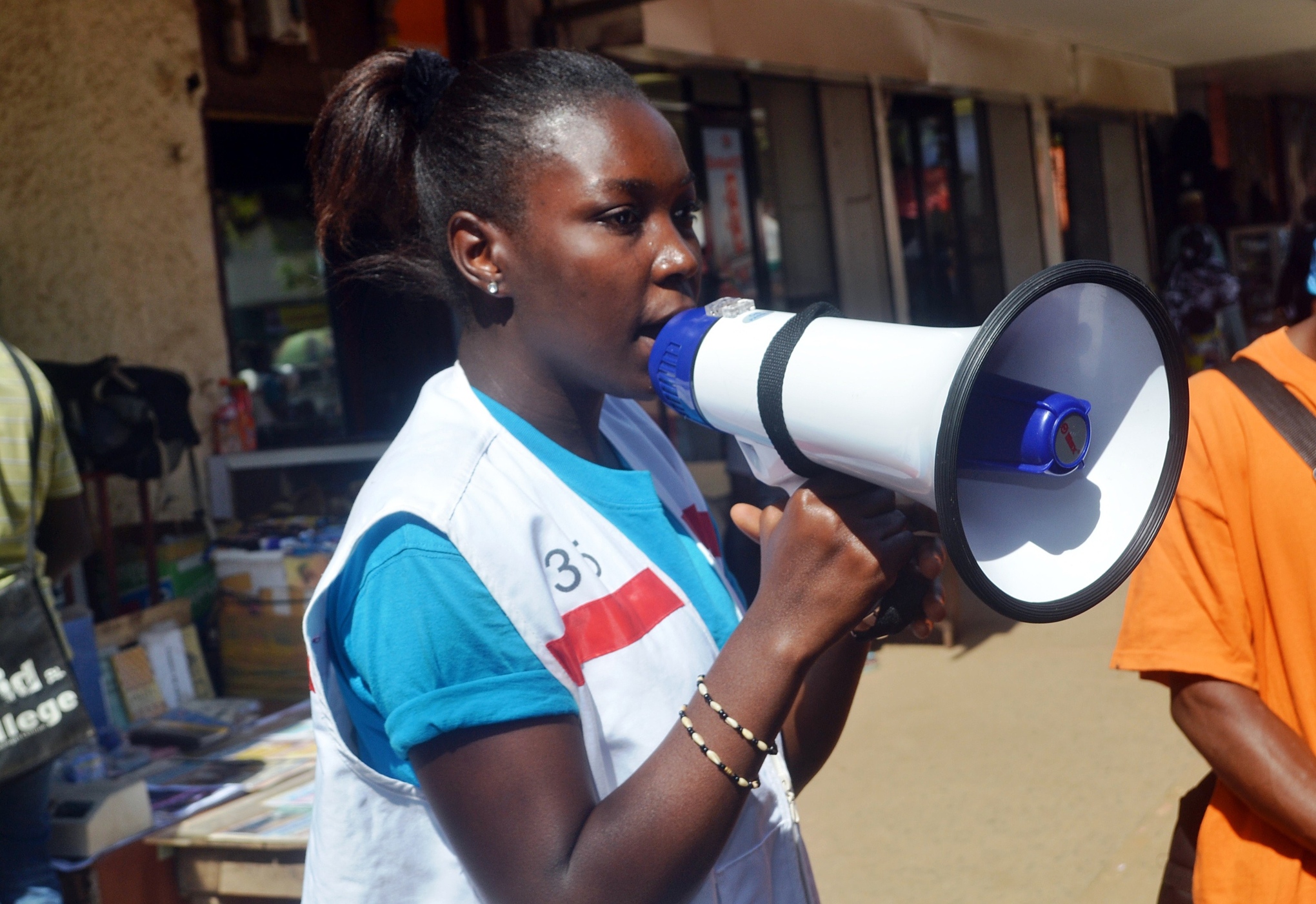
Reporting on Ebola, safely


Doctors, nurses, family and friends are taking considerable risks to treat people infected by Ebola. As Professor Peter Piot, the head of the UN's Ebola response, said: "the smallest mistake can be fatal".
Reporting a health crisis is possibly equally dangerous, but very different from reporting on a conflict or war zone. How do reporters and their crews cope?

A unique BBC report takes us behind the scenes, to look at the precautions that one team is taking to interview professionals and families and attend funerals. Notably, despite the breathing masks, full body suits and rubber gloves, the BBC crew are still not going into the 'Red Zone' where patients with confirmed Ebola infections are present. Sadly, it is often the poorly-equipped local staff, with limited training and poor compensation, who are doing the riskiest work in this crisis.

See the story and video here: http://www.bbc.com/news/health-29581414
For a grim read about the realities of an Ebola clinic, read this report in the New York Times: A  Hospital From Hell, in a City Swamped by Ebola 

06 September 2014

Ebola shows how (not) to communicate in a health crisis


IFRC - the International Federation of Red Cross and Red Crescent Societies - has spoken plainly about communication problems during the Ebola outbreak in Eastern Africa.

Ebola is scary because there is currently no proven cure. This has led to panic and strict controls, including border closures. That has limited the options for agencies, like IFRC, that are trying to help solve the crisis and treat the victims.

Though this story is full of development sector jargon, the message is clear: get people involved at all levels and don't just issue commands, but also listen and get local people involved.

"the communication approach in these circumstances should be “less top-down and less giving orders,” and not just limited to the agencies and their volunteers on the ground. It should be a multi-stakeholder effort, involving the corporate sector, the media and community leaders, with the government in a lead role. [Everyone] has a role to play here."

Read more on Devex.com

30 April 2014

40 ways to improve your social media posts


A simple but powerful list. What are your secret tips?

1. Write with a consistent, natural and conversational tone of voice. 
2. Focus on your readers. Understand their interests, needs, desires and motivations. 
3. Focus on timely topics but add your own voice. 
4. Add value to a post by encouraging discussion, asking a genuine question (advice or opinion).
5. A post should be clear and easily understood.
6. Avoid simply promoting your own company or work. 

Twitter (follow me: @Scott_McQuade)
7. Post 4-10 times a day.  
8. Avoid repeating a tweet more than once a day. Don’t automate the same tweet.
9. Include 1-3 relevant hashtags in tweets to help people who search by key words.
10. Include links, to get 86% more engagement.
11. Use images for twice the engagement rate.
12. Shorter tweets get read and re-tweeted more (under 100 characters).
13. Use no more than 130 characters, so people can retweet and add hashtags etc.
14. Live tweeting of events helps people follow along: nominate a clear, simple hashtag.  
15. Post during working hours for 30% more engagement.
16. Ask for re-tweets of important posts: it drives 12x more re-tweets. 

Facebook (like my Facebook page) 
17. Consistent quality matters more than quantity.  
18. No more than 4 posts a day.
19. Short messages work best. Long messages are okay if they’re compelling.  
20. Timing matters, but your audience is international. Spread posts throughout the day. 
21. Don’t forget weekends! Readers are more engaged when they have more time. 
22. Photos attract readers, responses and re-shares. 
23. Emoticons receive a 59% higher engagement rate, but use sparingly.
24. Explicitly ask readers to like/comment: it drives higher engagement.

Google+ (put me in your Google+ circle)
25. Include an image to grab attention.
26. Include links or post web articles (web links usually include images).
27. Pose a comment or question to encourage discussion.
28. Monitor discussions and return to the post to interact with readers.
29. Hashtags are automated, but make sure they are appropriate and delete if needed. Include 1-3 hashtags at the end of your post, but only if needed.
30. Keep it short: 1-3 paragraphs. Only a few lines are immediately visible, so get to the point.
31. Share with specific circles as well as making posts public. Include usernames in the post or comments to draw their attention or give thanks, but do it sparingly.

LinkedIn (if I know you, let's get LinkedIn)
32. Only share high quality content. 
33. Share new, informative material. Readers are happy to learn.  
34. Be a thought-leader by only talking about your area of expertise. Join relevant communities.
35. Only discuss professionally relevant topics. LinkedIn is not a general discussion forum.
36. Start conversations with a thought-provoking statement or question. 
37. Avoid simply promoting a corporate initiative or service or posting a news story. Instead, put it in context, pose a question and invite comments.
38. Prepare to engage with discussants: don’t post and run. 
39. Don’t simply post a link to a website. Put the content on LinkedIn for better engagement.

40. Share your expertise: add your own tips below!

Most of these commonsense principles also apply at Tumblr, YouTube and other social media sites.

27 March 2014

Plan well for maps


Maps are a great way to illustrate an issue, yet they can be fraught with challenges.
Many advocacy and information campaigns use maps to get collaborators involved - reporting on stockouts of medicines, or incidents of violence, for example. Maps are very helpful for outbreaks of disease, or in cases of disaster. Animated maps might help you explore geo-specific trends.

But there are some key questions to consider before you start - like getting access to an accurate map and how much it will cost. There are plenty of disputed borders in the world and tracking those takes time and money, so map owners typically want to be paid. Free maps might carry branding or other limitations, though there are a bunch of useful free options available.

Once you have a map, you need to consider how to get reliable data and how you will keep the map going. Fundamentally, how does the map fit into your communication?

In a blog about mapping violence against women, advocacy specialist Dirk Slater of Fabriders explores options including the mapping tools Ushahidi and Crowdmap. Dirk also discusses some key issues that you should consider before spending time and money on your project:
  • How can mapping support your campaigns and missions - how will you use it, how will it be maintained?
  • Take security very seriously: consider how to get quality data but avoid identifying people where information is sensitive. This inclues verifying the people who provide information.
  • Consider the cultural relevance of maps: do your audiences use maps, and how do they read them? Do they expect street map view, or satellite view? Topographical or political?
  • Consider how the map will be used. Will it show off your data to good effect? Will it influence people? How does the map connect with your strategy? 
Dirk also provides links to some further resources: questions to ask yourself before deploying Ushahidi, cleaning data, how to use icons, and how to verify users.

See: What I’ve learned about mapping violence


26 March 2014

How to write a good advertisement


Many people hate advertising because it is irrelevant, shrill or poorly thought-through. Writing ads that attract, inform and motivate our audiences is an important skill, but it is nothing new. 

The TV series "Mad Men" celebrates the heady days of advertising in the 1960s, but modern advertising came of age much earlier. Vance Packard's book, "The Hidden Persuaders" (Amazon) explored how advertisers tap into human motivations and weaknesses. It was first published in 1957.

Even earlier, in 1942, Victor O. Schwab wrote the seminal work "How to write a good advertisement" (Amazon). Republished many times, the work is a classic of logic and commonsense. Fundamental lessons include focusing on the benefits to the buyer, not on the strengths of the company or even the features of the product or service.

Schwab was a very creative writer, as illustrated by this poem his book:


I see that you’ve spent quite a big wad of dough
To tell me the things you think I should know.
How your plant is so big, so fine, and so strong;
And your founder had whiskers so handsomely long.
So he started the business in old ’92!
How tremendously interesting that is… to you.
He built up the thing with the blood of his life?
(I’ll run home like mad, tell that to my wife!)

Your machinery’s modern and oh so complete;
Your “rep” is so flawless; your workers so neat.
Your motto is “Quality”… capital “Q” –
No wonder I’m tired of “Your” and of “You”!
So tell me quick and tell me true
(Or else, my love, to hell with you!)
Less – “how this product came to be”;
More – what the damn thing does for me!

Will it save me money or time or work;
Or hike up my pay with a welcome jerk?
What drudgery, worry, or loss will it cut?
Can it yank me out of a personal rut?

Perhaps it can make my appearance so swell
That my telephone calls will wear out the bell;
And thus it might win me a lot of fine friends –
(And one never knows where such a thing ends!)

I wonder how much it could do for my health?
Could it show me a way to acquire some wealth –
Better things for myself, for the kids and the wife,
Or how to quit work somewhat early in life?

So tell me quick and tell me true
(Or else, my love, to hell with you!)
Less – “how this product came to be”;
More – what the damn thing does for me!

Too much to read? Here's Jeff Waite reading out the passage:

18 March 2014

Books for development - Conference


WHEN: June 2nd - 4th 2014
WHERE: Jack Morton Auditorium, George Washington University, 805 21st Street, N.W., Washington, D. C. 20052


The Books for Development Conference is an international forum for all those interested in the role of books, both print and e-formats, in promoting economic and social development.
The conference will address intertwined challenges of publishing for underserved populations: content delivery and business models. It will bring together leaders in publishing, technology, distribution, library science and economics to answer questions such as:
  • How can we develop sustainable business models for publishers, booksellers and distributors serving the developing world?
  • How can we exploit the cost advantages of production and distribution of e-publications in geographic areas with limited electronic infrastructure?
  • What is the current role of government policy and regulation in promoting or inhibiting availability of books?
  • How can advances in technology and funding enhance the value of library services for underserved populations?
  • How can we support indigenous publishers?
Learn more and register at the official website: http://www.books4development.org/

19 February 2014

Inspire people with your stories


UNDP Administrator Helen Clark is the most active head of an international organization on Twitter, according to Twiplomacy. Here, she sums up her commitment to social media, telling stories about international development and sharing tales of success.
"Development is about about stories. it is about stories of achievement, of progress, of people's lives being better than they were," she says. "People want to hear about this. They don't want to hear about all the failures, they want to hear about what difference are you making.
Development is about a lot more than the money you invest in it. It is about inspiring people to take action themselves."

12 February 2014

More women needed in the news media

A passionate call for greater representation, and protection, for women in the news media around the world, from Christiane Amanpour, CNN correspondent and presenter. Hopefully this will encourage more women to follow in her footsteps and others to hire, train and promote qualified women in equal numbers to men so that we get balanced news and media in future.

11 February 2014

Youtube video: quantity or quality?


Many communicators are turning to video to make their work more engaging. Audiences are certainly lapping it up, via PCs and mobile devices. But what makes for a good video?
In this video, science blogger Derek Muller reflects on the pros and cons - some of the them specific to YouTube - of producing lots of videos or investing time, effort and money in producing higher quality but fewer videos.
Muller has opted for quality, and it shows. It is the reason this video appears here, and it helps to explain Muller's success, even when he strays from his core science topics...
For more like this, see Muller's YouTube channel Veritasium.

04 November 2013

How to be an investigative journalist


How can a journalist get attention these days? Bloggers and the general public are swamping the breaking news cycle with tweets and photos from their mobile phones; companies are developing their own media content; and public relations practitioners outnumber reporters. It can be hard for a news reporter to get their head above the hype.
For the lucky few with the time, money and requisite skills, investigative journalism promises not only headlines but also infamy. But even if you have the time and inclination, how can you become an investigative journalist? UK newspaper The Guardian has put together a masterclass seminar with award-winning writers and professional snoops. They will explain how to find information and outfox the powers that want it hidden. This event occurs on November 30 in London and will cost £139, or £109 if you book early.

The Guardian hosts a series of other learning opportunities through the year. If you cannot make the introduction to investigative journalism, how about the digital journalism bootcamp? This costs a bit more, at £299, but is being held after work over four weeks in November (5, 12, 19 and 26 Nov.).

You can keep in touch with forthcoming learning opportunities by email, or follow @guardianclasses on Twitter.


The image above is from the London Journalism Centre, which offers a number of courses including politics, fashion and travel writing, among others.

27 October 2013

8 things every journalist should learn

There are so many different types of journalists that defining the curricula for journalism students can be a hot topic. Journalism includes small-town, all-purpose reporters; multi-purpose, multi-media workers; interactive data journalists and researchers; and specialists in many subjects.

Olga Khazan, writing in The Atlantic, proposes several common-sense core topics that should be in the toolbox of any journalist. Here are the headlines, with some thoughts of my own
  1. Statistics
  2. Data
  3. Experiments and sampling (i.e. how to interpret studies)
  4. Marketing (not only pitching stories and understanding public interest and e.g. viral media, but also handling pushy PR people and separating story angles from spin)
  5. Civic issues (human and civil rights and media law should also be part of this)
  6. Online writing (add broadcasting, video, audio and photography) 
  7. The internet - how it works and why (include privacy and research techniques)
  8. Plus: how about some basics, like story construction (5Ws+H, story pyramid, human interest), note-taking, writing techniques, hygiene (spelling, grammar, house style) and maybe even basic computer skills (keyboard, software etc.); plus some broader issues such as how to build rapport with readers, an understanding of human rights and journalistic rights, and a sense of ethics and obligation to match with your potential impact as an authority figure, commentator, critic and - perhaps - advocate (for a recent debate on the difference and merits of each, read this piece in The Guardian).
What do you think should be in every journalist's toolkit?


07 June 2013

Advocating with mobile apps


Apps are highly popular with users of mobile phones and tablets, especially when they are free, entertaining and informative. Many companies and non-profit institutions attempt to tap into this. Few capture the popular imagination by developing something that is both fun and meaningful.

Environmental advocacy group WWF has struck on a clever formula of charging a small sum for a game that has clear entertainment value, while informing users and raising funds for the cause that it is talking about.

As a measure of success, 500,000 people have already downloaded Rhino Raid. The game puts players in the shoes of an angry black rhinoceros in southern Africa, chasing poachers and avoiding traps. Proceeds from the $1.99 game support WWF rhino projects and the game also educates players about illegal poaching and the myths surrounding the use of rhino horn.

The app is available on Apple and Android.

WEB-BASED
Taking a very different approach to a very different issue, UN Women, UNICEF and UN-Habitat have launched a website that also works as a smartphone app. This is designed to provide information on support services for women and girls who are survivors of violence in the favelas of Rio de Janeiro.

The needs, benefits and inspiration behind the service are described on the UN Women website.

Creating a website in a mobile-friendly format helps to make the information as widely available as possible with minimal complications. The women and girls using the site are highly likely to be stressed and impatient. They could be using one of hundreds of different models of phones or accessing the site from a computer or other device. There is no need to visit an app store to download anything, which makes it faster and less of a burden on users who might have limited data allowances or minimal storage space available on their device. It also helps the developers by overcoming the guessing game of which mobile devices or operating systems to cater to: Apple, Android, Blackberry, Windows or even Firefox.

These recent examples provide a good indication of the diverse options for making information available on mobile devices.

22 April 2013

Learn more, spend less


Free online education is a tempting offer, especially when it can earn you real credit towards a university degree. For anybody motivated and curious - with time available - there are now many options for free courses from top universities. Some attract thousands of students and cover a wide spectrum of subjects.

Students enrol in these courses from all parts of the world. The fact that they can easily share their experiences and thoughts online, adds depth and enriches these courses in a way I have not seen before. It has been a long time since I studied on campus and many years since I studied for my masters degree by distance learning, using printed books and study notes delivered by post. These Massive Open Online Courses, or MOOCs, are a very different experience, with tools and features that make great use of modern web browsers, video, digital publications and discussion forums.

But be warned: these courses demand as much effort as a regular campus course. Anyone studying online also needs an extra helping of motivation and they need to be sure they have the time available to study, think, research and write. Watching videos and clicking a quiz sounds easy, but composing a quality essay and scoring the work of your peers can take many hours.

They are also not for everyone. Some students struggle with the language requirements (many courses are in English) and some complain about having limited internet access - not surprising, when students enrol from the remotest parts of Africa. Others express concerns about the focus of the courses (many of them are provided by universities in the USA, and the data and examples used can betray a lack of global focus).

Yet, if you have the energy and determination, these courses might be just what you need to keep your mind ticking over, follow your passion or develop your knowledge for a career move.

I recently completed a course on public health provided by the University of California, Irvine through the online platform Coursera.com. Among my fellow students was Larry Gordon, a journalist who recorded his experiences in this LA Times article. As many as 15,000 people enrolled in the course initially - it takes only a click - but fewer than 2000 got a passing grade, with many dropping out on the way. But that is no cause for shame: there was no penalty for failure and everyone is welcome to repeat the course... perhaps when they have more time available.

Coursera has already come a long way since the TED video above by the co-founder Daphne Koller in August 2012. For many of the reasons she lays out, online education has a lot of potential but also a long way yet to go. 

Take a course today!
These platforms offer many options:
UK Futurelearn: http://futurelearn.com/
Stanford Class2go: http://class.stanford.edu/
Standford venture lab: http://venture-lab.org/
MIT OpenCourseware http://ocw.mit.edu/index.htm
Open University OpenLearn http://www.open.edu/openlearn/

15 March 2013

Apply soon for UN journalism fellowships


The Dag Hammarskjöld Fund for Journalists is inviting applications for fellowships in 2013, from professional journalists in developing countries. The successful fellows get to join the reporters covering United Nations affairs. They will be flown to New York to report on the 67th session of the United Nations General Assembly in September. This will include the High Level Meeting on progress towards the Millennium Development Goals, which should be a particular interest to audiences back home.

Applicants should be quick: the deadline is April 5. 

Rread more here: http://bit.ly/ADuXHZ

26 February 2013

Simple data journalism tools


The Guardian's Datablog continues to serve as a beacon to data-focused journalists and others trying to use numbers to help tell stories.

This interview by O'Reilly's Strata blog includes reference to several of the key tools that the Datablog uses; some of them disarmingly simple: Excel, TextEdit, Google Fusion Tables, Google Spreadsheets,Timetric, Many Eyes, Adobe Illustrator, and Tableau.

Link

25 July 2012

Training for rock stars


Want to be trained by ACDC?
No, not the Australian rock band, but the African Centre for Development Communication.
ACDC provides a range of communications training courses for non-profit executive managers of communication functions and others. The aim is to hone managerial and communication skills and learn new strategies for using communications more effectively. Networking with local and international Communicators is a bonus. "Participants not only become stronger strategic communicators, they also learn to build the capacity of their organizations to use communications to reach their social change goals."
Course participants and trainers explore communications building blocks including planning and tactics, evaluation and fundraising. Of course social media is covered, as well as evergreen topics such as presentation delivery, media interviews and storytelling.
ACDC recommends the course for communication and PR managers and others responsible for strategic communication in non-profit organizations including governments, civil society organizations,training and research institutions, faith-based organizations and donor organizations. 
Courses are held in Nairobi, Kenya. Learn more here: http://goo.gl/yyQPBo

04 June 2012

Social media research


Update 30 May 2012: Internet Trends published by Kleiner Perkins Caufield & Byers for the D10 Conference. Slides by Mary Meeker here. Scribd document here. Notable: continued rapid growth in users, with mobile internet set to grow strongly.  Largest user populations are China, USA and India, but USA is now mature, ranking only 8th in terms of growth behind late-comers such as Indonesia, Philippines, Nigeria and Mexico.


The internet: the 'quiet engine' of Africa.


Previously
Facebook and Twitter are only part of the puzzle, and their penetration is much lower outside the USA and Western Europe. If you want to understand the social media environment, you need to consider the role of Orkut in India and Brazil, vKontakt in Russia, and Qzone, Renren and Weibo in China. 

Don't forget the newcomers such as Google+, Pinterest, Instagram, Reddit, Imgur, etc. etc.


To learn about social media trends around the world, the following research is a good place to start. Other research is available online but is locked behind paywalls.


Some highlights:
  • 65% of online adults use social networking sites (August 2011). Social media users are getting older, as usage widens, says a Pew Internet survey.
  • Almost all US companies will be increasing their investments in social media in 2012, according to a study by consultancy Booz & Company and Buddy Media. Advertising, public relations and customer services would mostly benefit as will market research and recruitment. 
Worldwide trends - research papers (PDFs):
Usage patterns
  • Trends in Social Media: Persistence and Decay. HP Social Computing Lab (2011?). Undated empirical study finds that if a topic resonates with Twitter users it is more likely to become a trending topic. The level of user activity and the number of followers is not so relevant. 
  • New tools displace blogging in fast-growing US companies. The 2011 Inc. 500 Social Media Update finds blogging,  message boards, video blogging, podcasting and MySpace are declining for the first time since 2007 in favour of new platforms and tools including Facebook, LinkedIn, Twitter, YouTube, texting, downloadable mobile apps and Foursquare: http://goo.gl/M3I98
  • 2012 Social Media Marketing Industry Report. Social Media Examiner. Single survey shows growth overall, marketers keen for returns on investment, and growth in video content, Google+: http://goo.gl/OjYNc


Websites of interest
:


US accountants not counting the benefits
Accounting professionals are accustomed to measurable results, which might be why - in the absence of strong measures of the return on investment - a late 2011 survey found a lack of commitment to social media.

14 May 2012

Africans launch digital news contest


The first competition for digital news innovation in Africa has just been launched and closes in July. Winners will be announced on 10 November 2012.

Winners get cash prizes of up to $100,000 plus business, technical and marketing support. Finalists will be invited to a camp in Tanzania in August for workshops with mentors and industry experts.

Proposals can be submitted by news pioneers anywhere in the world, though they must have an African media partner to help develop and test the innovation.

This innovation challenge focuses on journalism and the news media. The organizers are looking for disruptive digital ideas for improving the way that news is collected and disseminated. This includes tools or strategies that use the Internet, mobile platforms, data driven journalism, computer assisted reporting, digitally augmented reality, or other electronic means to improve the relevance and impact of news media. 

Winning ideas should be focused on providing pragmatic solutions to real challenges facing African media.

Innovations are being sought in four broad categories: news gathering; story telling; audience engagement; or the business of news. Within these categories, the judges will look for ideas with the following goals:
  1. Strengthen existing media platforms, or harness new digital platforms for engaging audiences and transmitting news other journalistic content.
  2. Improve the way news reaches audiences, from traditional circulation / airtime management to newer disruptive ‘cross platform’ channels.
  3. Amplify the relevance and usefulness of news by improving the immediacy, depth and accuracy of journalistic content.
  4. Enhance the impact and ‘shelf life’ of news by extending its influence and intrinsic value for both audiences and content services.
  5. Deepen media’s understanding of its audiences and markets by improving user analytics, audience profiling and market segmentation.
  6. Boost the media’s resource base by diversifying business models, developing new revenue streams or improving operational efficiencies.

Finalists will be invited to the OpenNews Camp in Zanzibar, Tanzania, in August for one-on-one workshop sessions with business development mentors and other industry experts. Finalists will use these sessions to refine and strengthen their proposals, as well as develop implementation plans and budgets ahead of final judging.

Winners will receive cash grants of between $12,000 and $100,000, plus additional business development support, technical mentorship, and marketing support. Winners may also be offered opportunities to pilot their projects in AMI member newsrooms and showcase the results at international conferences or to venture capital funds.

All entries have to be made on the competition website: http://africannewschallenge.org

The African News Innovation Challenge (ANIC), is a pan-African contest designed to support digital innovation and experimentation that improves the quality and impact of African journalism. It that aims to accelerate innovation in news organisations by funding transformational ideas and then continuing to support them through a network of peers and advisors. It encourages new digital tools and techniques for ‘making’ news, new ways for audiences to engage with news, and new models for media organisations to sustain themselves. The idea is that the contest will support new media experiments and digital news startups in data driven journalism and investigative reporting, newsroom management, audience engagement, digital convergence and media business models.
ANIC is modelled on the Knight News Challenge in the USA, customised to address the challenges facing African media.

ANIC is run by The African Media Initiative (AMI), the industry association that is Africa’s largest umbrella body of media owners and executives.  AMI’s mandate is to serve as a catalyst for strengthening African media by building the tools, knowledge, and technical capacity for the media to play an effective  ‘public interest’ role in African society. This includes assisting with the development of professional standards, financial sustainability, technological adaptability, and civic engagement.  AMI believes that democracy thrives when people and communities are informed and engaged.  

ANIC funds news experiments and digital media startups in order to help cover the costs of developing, testing and scaling a new digital news venture or product.

Good luck!

11 May 2012

Best Free Tools To Make Infographics


Here is a great selection of tools for presenting data in visually compelling ways. 


As Fast Company notes, "it's not enough to simply write about data any longer; the world wants visuals."

A set recommended by Fast Company:
Many Eyes, by IBM;
Hohli for venn diagrams and scatter plots etc.;
Wordle, for word clouds; and
Visual.ly for not only creating, but also sharing infographics.

Link to post: The 5 Best Free Tools For Making Slick Infographics | Fast Company


Another great set of tools can be found here.

"Datavisualization.ch Selected Tools is a collection of tools that we...
 work with on a daily basis and recommend warmly... (and) will make your life easier, creating meaningful and beautiful data visualizations."

This list includes Web apps such as Stanford University's DataWrangler, for data cleaning and transformation, GeoCommons, a public community and set of tools to access, visualize and analyze data with maps, and Impure/Quadrigram, a visual programming language to gather, process and visualize information.

Read more about this collection at The Next Web. 


See also:

Translate